Recognizing Mental Health Progress
By: Kiana Blake-Chung
“I wanted to remind you that these people are not your friends.”
My manager sat me down in his office to lecture me one afternoon in December. “They don’t actually care about you,” he continued.
I felt my heart sink a bit but he followed it up with a “take this with a grain of salt” and I started to empty out the salt shaker. I’ve had many conversations of this sort in the past. Ones where teachers, pastors etc. pulled me aside and asked me to tone myself down or modify my behavior. Ones that no matter the words used – however well-meaning or gently spoken they may be – left me in a cloud of shame and self-hatred. I am too much. I can’t be myself. I don’t belong in this space. That’s all I could ever glean from those conversations.
On this December afternoon however, I remained collected. I thanked my manager for the feedback and applied that salt. These people (the residents of the building where I work as a doorman) are not my friends. I tend to want to get to know everyone, but not everyone likes getting to know those who work for them. I considered the many interactions I have on a regular basis and determined that in the course of my day, several residents ask me follow-up questions about my life. When my sister gave birth to my first niece, I enthusiastically told everyone about my new status as an aunt. Everyone congratulated me, but a few people asked how my sister was doing. A few people asked to see a picture of the baby and a few people, seven months later, still ask what milestones my niece is hitting as she grows. These people, I determined, may not be my friends, but they are friendly and they do genuinely care about me. I feel safe to share with them and I simply won’t offer more information about my life to those who don’t ask.
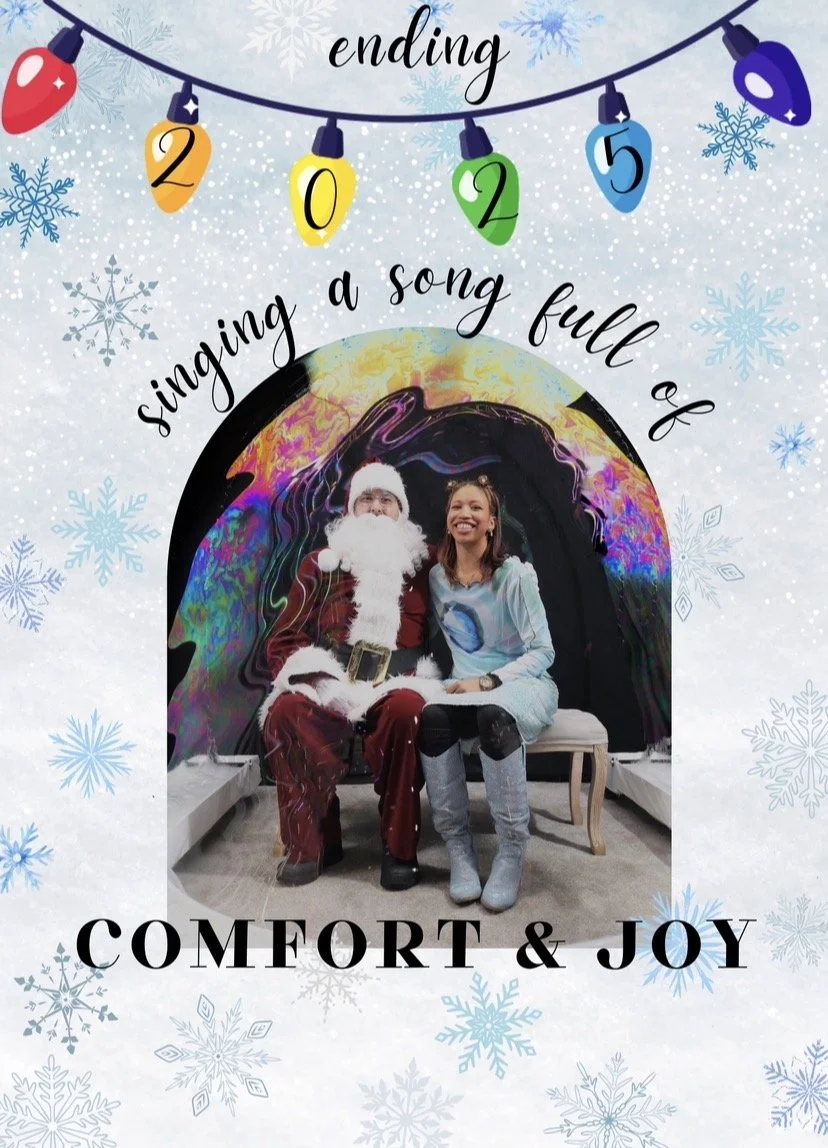
I gave my friendly residents a copy of my holiday card this year.
It wasn’t until later that night, when I was recounting the story to my Instagram friends, that I realized how huge it was that I didn’t spiral into the shame and self-loathing funnel after that conversation with my manager. Emotional growth is the hardest to measure because these skills usually develop at a slow and steady pace. They’re easy to discount because, while many children learned them as they were raised, I’m learning them as a grown, mentally ill adult.
So I began to compile a list of other emotional skills I have gained that I wasn’t recognizing. Throughout December 2025 achievement cake videos were going viral on the internet. I was comparing my lack of accomplishments to the amazing things others have done and putting myself down. Only after 2026 began did I decide to film my own take on the trend and share my mental health achievements with the world.
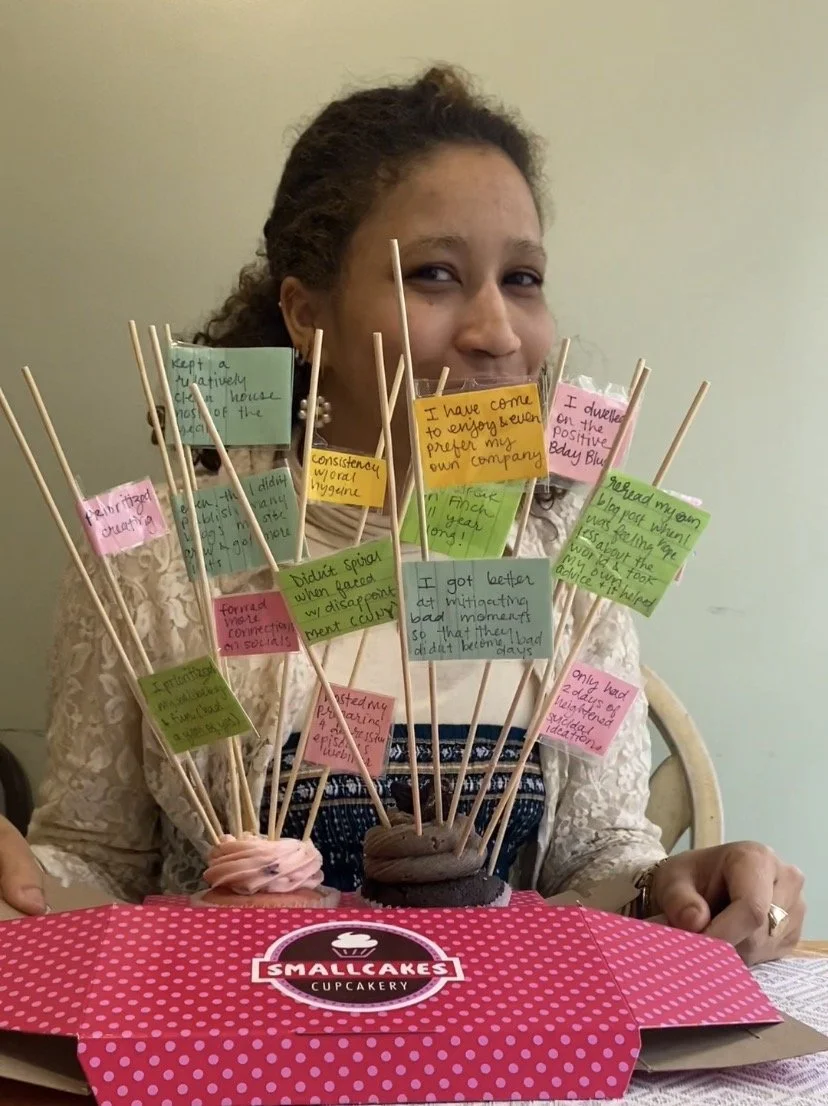
My 2025 Mental Health Achievements:
I became more consistent with my oral hygiene. Brushing my teeth has always felt like an absolute chore, but this past year I flossed, used mouthwash and brushed my teeth twice a day almost every day.
I was more consistent with social media posting and not only grew my followers, but formed meaningful connections with the people that I met via TikTok and Instagram.
I prioritized my wellbeing and essentially had a “year of yes.” In the same way that I chased joy in 2024 to escape suicidal ideation, I spent the entire calendar year of 2025 viewing my life through the lens of “will this bring me joy?” and pursuing that joy guilt-free.
I didn’t break my streak on Finch, the self-care app that has revolutionized the way I prioritize my mental health. At the time of writing this, I am approaching 500 days of using the app.
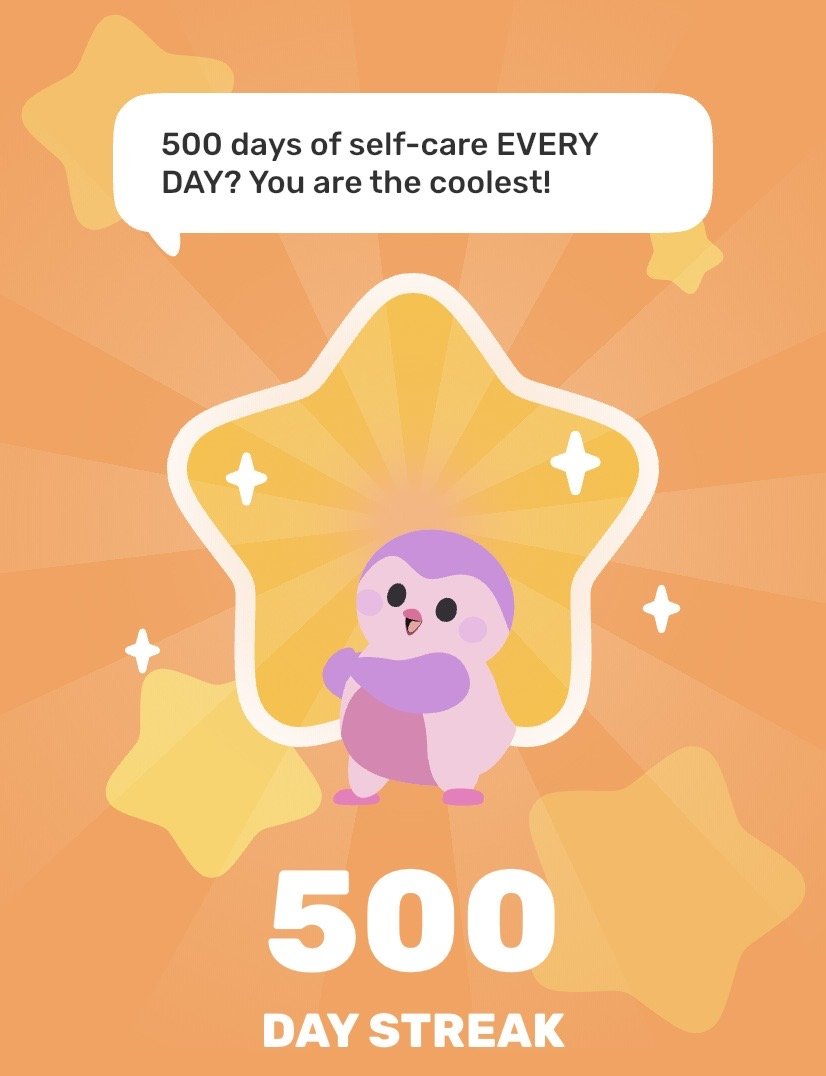
My Finch streak!
5. I prioritized creating, sewing, to be specific. I recently read a book called “This is Your Brain on Art” and learned how amazing experiencing and creating art is for your brain. I figured this out in 2024 when I wrote about how my creativity was saving my life, but it was very interesting to learn the neurological reasons as to why embracing the arts helped my mental health so thoroughly.
6. I hosted my Preparing for Depressive Episodes Webinar and I sold more tickets than I did the first year. If you missed the live webinar, the recording and accompanying digital workbook are listed on this website for a small fee.
7. My website continued to grow and reach more viewers, even though I did not write very many blogs.
8. kept a relatively clean house all year long! There were a couple months where the disorganization ran rampant (usually when I was in the process of changing roommates and then again during my birthday month), but for the most part my house was always ready for a friend or acquaintance to drop in.
9. I allowed myself to rest with minimal guilt. When I realized that pacing myself and resting allowed my immune system to function at its best, I decided to stop letting internalized capitalism dictate my productivity levels. I didn’t get sick at all last year and I most definitely attribute a large chunk of that to not over-working myself.
10. When I was feeling extremely hopeless about the political landscape of the United States I re-read a previous blog I’d written Keeping Hope In The Darkness, which I published on the 47th president’s inauguration day. Then I took my own advice by volunteering with Zohran Mamdani’s mayoral campaign and felt a lot better.
11. I maintained a positive outlook on my birthday even as I was running late to appointments, skipping meals and facing racist microaggressions during my birthday dinner from the staff at the restaurant where I attempted to celebrate. I chose to not let anything ruin my day and ended my night in the most perfect way at my favorite gay bar singing karaoke.
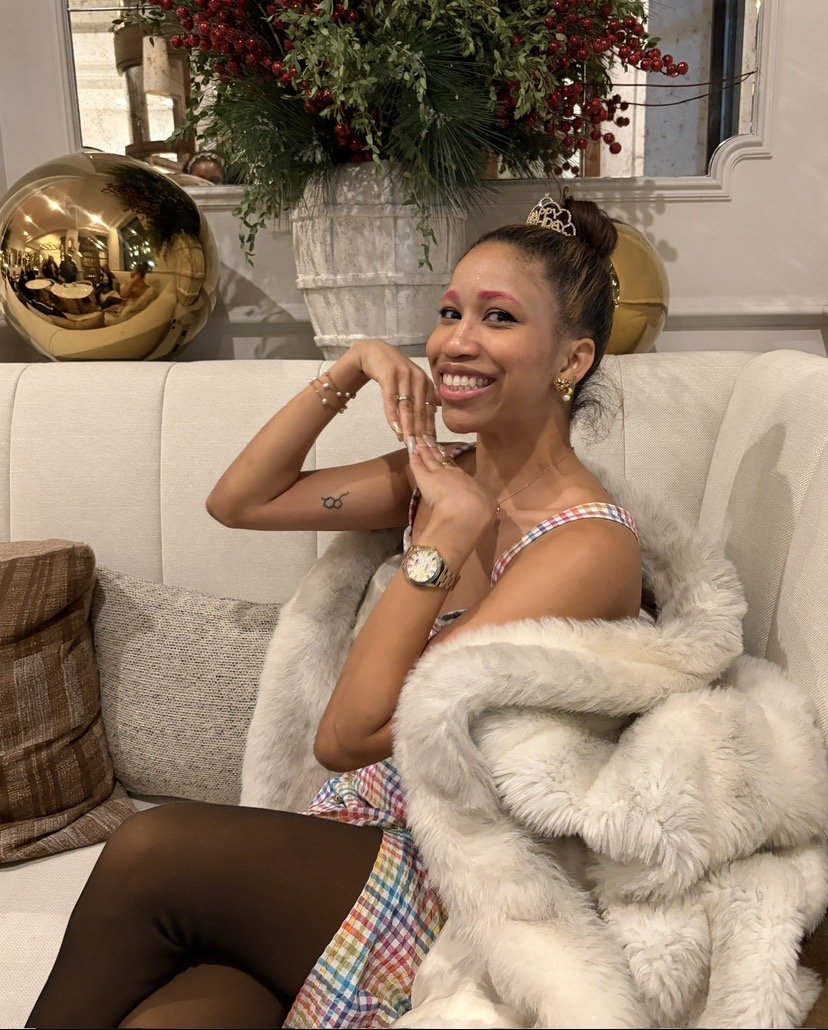
I am
12. On that note, I got better at mitigating bad moments and preventing them from becoming bad days. When I downloaded Daylio in 2024, I was convinced that 80% of my life was made up of Bad Days™. Over the last two years recording my mood each day, I found that I am very hesitant to label any given 24 hours as a Bad Day™ when truthfully, the overwhelming majority of my days are a melange of good and bad moments. My journaling exercise of listing every good moment in a day was pivotal to acknowledging positivity. And being able to recognize beauty taught me to seek it out after having a bad moment, which greatly reduces the length of said moments.
13. I didn’t spiral when faced with major life disappointments either. I applied to the City University of New York and I got in, but financial aid didn’t cover the amount I needed. Rather than stew in negativity, I had a revelation that led me to dream bigger and gave me the kick in the pants to pursue the artistic path I had been denying myself.
14. I have come to enjoy and even prefer my own company because my mind is now a safe place for me to be and alone time is no longer a dangerous pastime.
15. My biggest accomplishment of 2025 is that I planned to get rid of my demise supplies by the end of the year, even adding that to a notes app titled 2025 Outs. I finally cleared out the back of my closet where I’d been hiding the items I bought in September 2023 to end my life. Even more, I love how non-monumental doing so felt to me – just a regular day dedicated to decluttering.
My aunt called me as I was organizing the toothpicks that I had attached my post-it note achievements to and I excitedly told her about my mental health accomplishment cake. She listed and interjected a couple “good for yous” and asked follow up questions about some of them. “What supplies had you bought? How creative!” Then she asked the judgemental: “Do you think if you focused less on your own happiness that you’d be able to achieve some of your actual goals?” I floundered that that hadn’t been the point of this exercise and that I feel like I am finally in a good place mentally to work on my goals, but my excitement had deflated.
I don’t think many people understand how grueling chronicle suicidality is to grapple with. There is no focusing on goals when you have no desire to live. Living a successful goal-oriented life does not guarantee happiness. I used to envision my biggest dreams coming true every night and was tormented by the thought that even if I were to somehow get everything I desired in life on paper, that nothing would change and I would most likely still be miserable despite it all. That is one of my most hopeless thought patterns – that misery is so entrenched in my mind, such an innate part of my personality, that there could be no escaping it ever. The fact that I no longer feel that way and went an entire calendar year without feeling that way will forever be the most impressive, miraculous win I ever achieve.
I sound confident in the video I uploaded to my social media accounts, but the framing of these emotional skills as an achievement to be proud of was hard to sell to myself because I am my harshest critic. I no longer care to be, so I am choosing to celebrate myself at every stage and believe that sooner, rather than later, the successes I am celebrating will be the realization of my wildest dreams.
S/O to Jennifer Ortakles-Dawkins for editing!
If you find this post valuable and believe in the mission of Mental Health Tings and would like to partner with us financially, you can make a one time donation by buying me a coffee!
You can also make a recurring monthly donation by signing up for our Here for the Blog $10 a month Patreon Tier.
All donations go toward the subscription cost of maintaining the website as well as payment for the various guest bloggers.
Thank you!